 howMed Know Yourself
Francisella tularensis is a species of gram negative rods, which are non motile, non-spore forming aerobic bacteria, responsible for causing tularemia.
Portal of Entry
Humans are accidental “death-end” hosts, bitten by vectors or skin contact with wild animals. Rarely ingested in infected meat, producing gastrointestinal tularemia. Also are inhaled producing pneumonia
There is no person-to-person spread.
Pathogenesis
- Form ulcers at the site of entry.
- Survive in macrophages and are transported to reticuloendothelial system
- Granulomas are formed, followed by necrosis and abscess formation.
- Endotoxin is produced, but no exotoxin.
Virulence Factors
Lipopolysaccharide serves as endotoxin.
Predisposing Factors
• Contact with wild animals
• Bitten by vectors
• Ingestion of infected meats
• Immunocompromised persons
• Cuts in skin
Clinical symptoms
Clinical symptoms depend upon the site of entry:
Handling infected animals
- Slow growing ulcer at the point of contact
- Swollen lymph nodes
Inhaled
- Sudden development of headache
- High fever
- Chills
- Body aches
- Fatigue
Ingested
- Sore throat
- Abdominal pain
- Diarrhea
- Vomiting
- Eye infections
- Ulcers
- Pneumonia
Lab- Diagnosis
Microscopy
• Gram negative rods
• Non motile
• Non- spore forming
• Aerobic
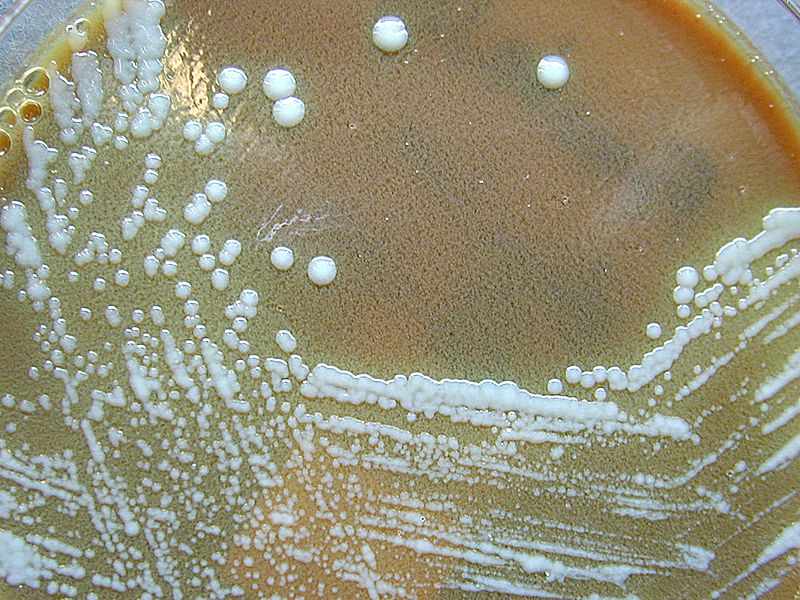
Culture
Rarely done because of:-
- High risk of transmission of infection to lab workers
- Special cysteine- containing medium is required for growth is not easily available
Serological tests
• Agglutination test with acute and convalescent phase serum sample.
• Fluorescent –antibody staining
• PCR